
ADHD Counselling with FloatVR
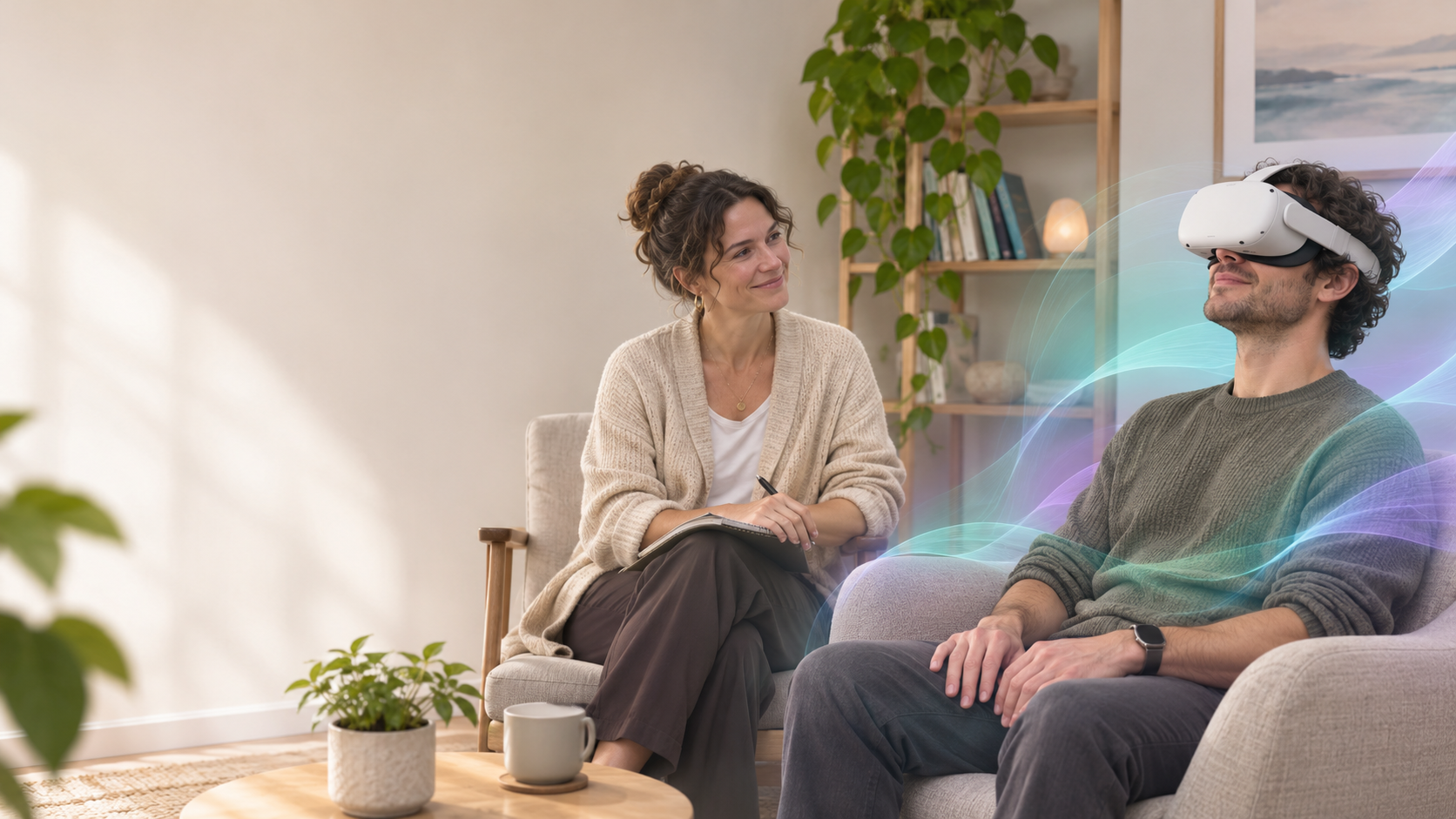
Space to settle. Support for everyday life.
Living with ADHD can involve a busy mind, emotional overwhelm, difficulty getting started, and the effort of keeping everyday responsibilities on track.
Counselling offers space to understand your experiences and develop practical strategies that suit your life. FloatVR adds an optional immersive relaxation experience—a chance to pause without having to follow instructions or complete a task.
FloatVR for ADHD: A brief overview
FloatVR uses immersive, evolving audio-visual environments to create an experience designed for relaxation. Instead of following a guided meditation, you enter a virtual world and allow yourself to experience its sights, sounds, and movement.
Its design draws on soft fascination and Attention Restoration Theory: the idea that gently engaging environments may offer a break from effortful, directed attention. These principles provide a rationale for the experience; they do not, by themselves, establish its effectiveness as an ADHD treatment.
FloatVR’s generative worlds change over time, offering variety across sessions. The core experience requires no breathing exercises, mindfulness skills, verbal guidance, or performance.
What makes FloatVR different?
An experience without instructions
FloatVR engages the senses through immersive environments. There is no task to finish or score to achieve.
Evolving environments
Generative worlds change as the experience unfolds, rather than simply replaying a fixed sequence.
Adjustable sensory settings
Features such as visual complexity, movement, speed, and colour can be adjusted to explore what feels comfortable. More stimulation is not always better; individual preferences matter.
An optional addition to counselling
A counsellor can help you explore the experience, reflect on your response, and connect what you notice with your goals for therapy.
Why might this appeal to someone with ADHD?
A different way to approach relaxation
Some people with ADHD find stillness, breath-focused exercises, or guided meditation frustrating. FloatVR offers another format: an immersive environment that invites attention without requiring a particular technique.
Variety with room for adjustment
Changing environments may appeal to people who lose interest in repetitive relaxation exercises. Adjustable settings offer opportunities to explore a comfortable level of sensory input.
A pause within a demanding day
A brief experience can provide time away from everyday demands. Whether it helps you feel calmer or more ready to engage will depend on your individual response.
FloatVR is not a test of your ability to relax. If it feels uncomfortable or unhelpful, your counselling can continue without it.
How counselling and FloatVR work together
Relaxation is one part of support. Counselling provides the opportunity to understand difficulties, build skills, and make changes in everyday life.
Together, we can work on:
Managing overwhelm and responding to strong emotions.
Breaking tasks into manageable steps.
Developing routines that account for attention and motivation.
Exploring procrastination and avoidance without judgement.
Communicating needs and navigating relationships.
Reducing self-criticism and recognising personal strengths.
A session may begin with a conversation about how you are feeling and what you need. If suitable, you may choose a brief FloatVR experience, followed by time to reflect and identify a practical next step.
The intention is to connect the experience with meaningful therapeutic work.
What does the research say?
Research into FloatVR is emerging. A published feasibility randomised trial involving adolescents in residential care reported improvements in aggression and emotional distress over a four-week intervention, alongside immediate improvements in positive mood after sessions.
These findings are encouraging, but the study was not designed to establish FloatVR as a treatment for ADHD. It also does not establish that combining FloatVR with counselling improves ADHD symptoms or executive function.
Other research and clinician observations described in FloatVR’s supporting materials explore anxiety, relaxation, and engagement in therapy. Published studies, unpublished findings, clinician observations, and personal testimonials offer different levels of evidence and should be considered separately.
FloatVR is offered as an optional relaxation tool alongside counselling, rather than a replacement for ADHD assessment, established psychological interventions, or prescribed medication.
Your comfort comes first
Before using VR, your counsellor will discuss suitability, explain the experience, and check your comfort.
Tell your counsellor about motion sensitivity, migraines, seizures, balance difficulties, or previous discomfort with VR. You can pause or remove the headset at any time.
Frequently asked questions
Do I need experience with meditation?
No. The core FloatVR experience does not require meditation skills, controlled breathing, or following spoken instructions.
Will FloatVR improve my focus?
Individual responses vary. Some people may find the experience relaxing, but improved ADHD symptoms or lasting attention benefits cannot be promised.
Can I use this alongside medication?
Counselling can form part of a wider ADHD care plan. Continue to discuss medication decisions with your prescribing clinician.
Can I have counselling without VR?
Yes. FloatVR is optional. Your preferences, comfort, and counselling goals guide the sessions.
Find an approach that fits you
You do not need to arrive feeling calm or knowing exactly what to say. We can begin with what feels difficult and explore useful ways forward together.
Contact us about FloatVR